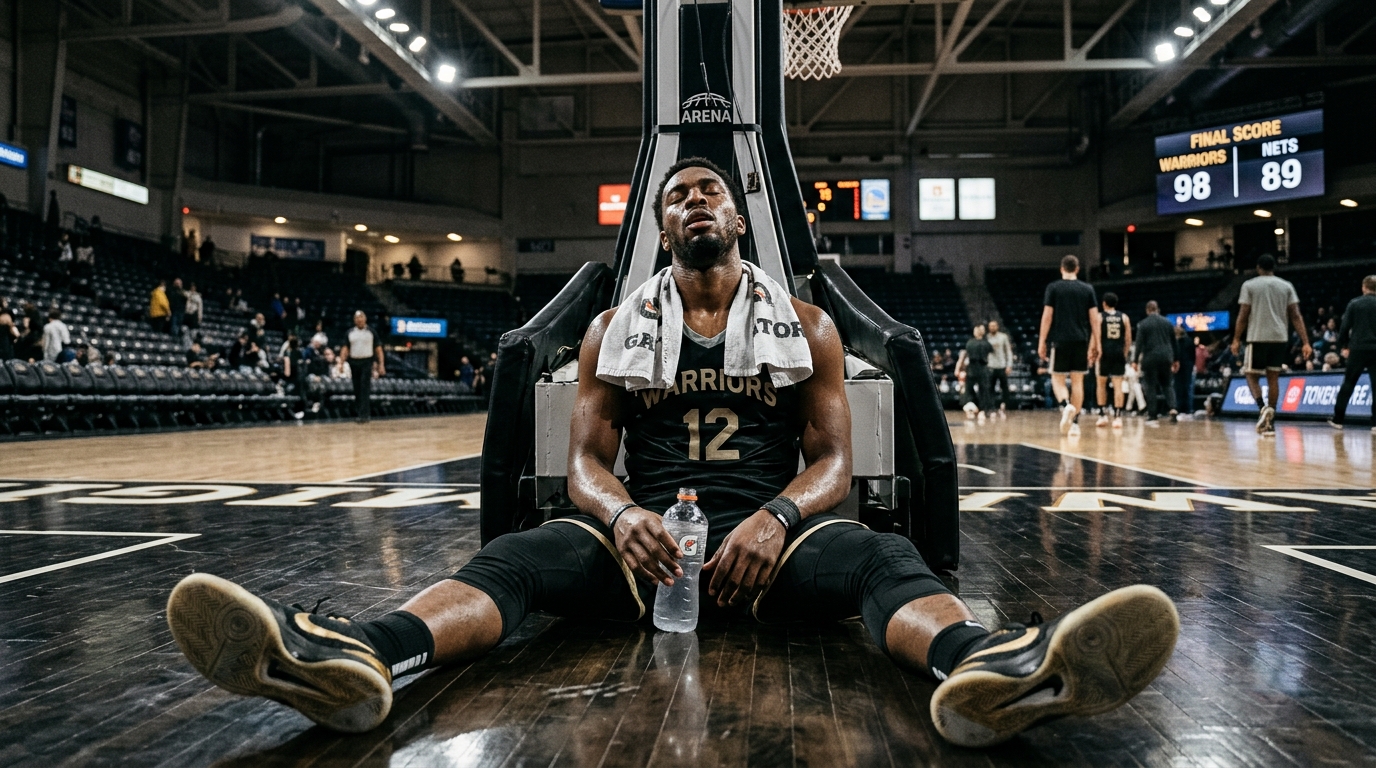
You have put in the hours on the court. Your shooting form is solid. Your footwork is sharp. Your conditioning is where it needs to be. But when the pressure builds — a deciding point, a tight fourth quarter, a final set — something shifts. The execution that felt automatic in practice suddenly feels uncertain in competition.
This is not a physical problem. It is a mental one. And it is one of the most common experiences across every court sport, at every level of play.
Mental performance training is the practice of developing the psychological skills that allow athletes to perform at their best when it matters most. It is not about positive thinking or motivational speeches. It is a structured, evidence-based approach to building focus, composure, confidence, and resilience — the same way you build strength, speed, or technical skill. This guide explains how it works and how you can start applying it to your game.
Why the Mental Game Matters More Than Most Athletes Realize
Physical preparation is necessary, but it is not sufficient. Research consistently shows that once athletes reach a certain technical level, psychological factors become the primary differentiators in performance outcomes.
According to the Barça Innovation Hub’s research on mental performance in elite athletes, psychological factors can account for up to 30% of the difference in performance at the elite level. Two athletes with identical physical abilities can perform very differently when pressure sets in — and the gap is almost always mental.
For court sports athletes specifically, this matters enormously. Basketball, tennis, and volleyball all involve high-pressure moments where decisions must be made quickly, composure must be maintained after errors, and confidence must hold through momentum swings. A player whose mental game cannot match their physical preparation will consistently underperform when games are on the line.
The encouraging reality is that mental skills are not innate traits. They are learnable, trainable, and improvable — just like any other component of athletic performance.
The Core Mental Skills Every Court Sports Athlete Needs
Effective mental performance training is built around a specific set of psychological skills. According to the Ohio Center for Sport Psychology, successful athletes across all sports share nine core mental skills: maintaining a positive attitude, self-motivation, realistic goal setting, effective communication, positive self-talk, mental imagery, anxiety management, emotional regulation, and sustained concentration.
For court sports athletes, four of these skills have the most direct and immediate impact on performance.
Focus and Concentration
Court sports demand that you process a large amount of information simultaneously — where teammates are positioned, what the defense is doing, how much time remains, what your own body is doing — and make the right decision under time pressure. Players who lose concentration miss reads they would normally catch and make errors they would normally avoid.
Concentration is not about trying harder to focus. It is about training your attention to stay on the right things at the right times, and learning to reset quickly when it slips. The best court sports players know exactly what to pay attention to in each situation, and they practice that skill as deliberately as they practice their physical technique.
Confidence and Self-Belief
Confidence in sport is not a feeling that arrives on its own — it is built through evidence. When athletes develop a consistent pre-performance routine, set and achieve progressive goals, and reflect honestly on their own improvement, confidence becomes something they actively construct rather than passively wait for.
Fragile confidence — the kind that crumbles under pressure or after a mistake — is usually the result of tying self-worth to outcomes. Durable confidence comes from trusting your preparation and your process, regardless of the scoreboard. This distinction changes how athletes respond when things go wrong mid-game, which in court sports happens constantly.
Composure Under Pressure
Pressure moments in court sports are unavoidable. The free throw with two seconds left. The tiebreak serve. The deciding set point in a volleyball match. These moments are when composure separates players who execute from players who tighten up.
Composure is not the absence of nerves. It is the ability to function effectively despite them. Athletes who train composure learn to recognize the physiological signals of pressure — elevated heart rate, shallow breathing, muscle tension — and use specific techniques to regulate those responses so that performance is not disrupted.
Emotional Regulation After Errors
In every court sport, errors are inevitable. A missed shot, a double fault, a hitting error on match point — how an athlete responds to these moments determines far more than the error itself. Players who spiral after mistakes compound one error into several. Players who reset quickly keep their performance level high even through adversity.
Emotional regulation is not about suppressing frustration. It is about processing it quickly and directing attention back to what is controllable in the next play. This is a skill that can be trained through consistent practice and self-awareness developed over time.
Practical Mental Training Techniques You Can Start Using Now
Understanding mental skills conceptually is one thing. Building them requires consistent practice through specific methods. Here are the most effective techniques court sports athletes can apply immediately.
Visualization and Mental Imagery
Visualization involves mentally rehearsing performance in vivid, multi-sensory detail before you execute it physically. Neuroimaging research has demonstrated that visualization activates brain circuits very similar to those engaged during actual movement — meaning your brain treats a well-constructed mental rehearsal as genuine practice.
Effective visualization for court sports athletes includes the sights of the court and opponents, the physical sensations of executing a skill correctly, sounds in the environment, and the emotional state associated with performing confidently. Before stepping to the free-throw line, before a tennis serve, before receiving a volleyball, mentally seeing and feeling the successful execution primes the nervous system to deliver it.
Practice this technique daily, not just before competition. The more detailed and consistent your mental rehearsal, the more powerfully it reinforces the neural patterns associated with your best performance.
Breathing and Arousal Control
Controlled breathing is one of the most immediately effective tools available to any athlete. Slow, diaphragmatic breathing activates the parasympathetic nervous system, which reduces the physiological arousal response that accompanies high-pressure moments. A simple four-count inhale, hold for four, and six-count exhale can shift your physical and mental state noticeably within seconds.
Build this into your existing pre-shot or pre-serve routines. The routine itself creates a consistent anchor — a behavioral sequence that signals to your brain and body that you are prepared to perform. Over time, the routine becomes automatic, giving you a reliable reset mechanism available at any point during competition.
Constructive Self-Talk
The internal dialogue athletes maintain during competition directly influences their performance. Negative self-talk — criticizing mistakes, catastrophizing errors, predicting failure — creates a threat response that tightens muscles and narrows attention. Constructive self-talk directs the mind toward what to do next rather than what went wrong.
This does not mean forcing false positivity. It means replacing unhelpful statements with precise, action-oriented cues. On the basketball court, “I always miss these” becomes “attack the basket.” On the tennis court, “I keep double-faulting” becomes “slow down, toss high.” In volleyball, “I shanked that pass” becomes “platform ready, eyes on the ball.” The shift is from evaluation to instruction — from the past to the next action.
If you want to build the physical side of your game alongside your mental skills, our guide on AI training tools for court sports athletes covers how technology can complement your overall development plan.
Goal Setting With Process Focus
Athletes who set only outcome goals — winning matches, earning spots on teams — tie their confidence and motivation to factors they cannot fully control. Process goals focus attention on the behaviors and decisions that are within your control in every training session and competition.
A useful structure sets three levels of goals simultaneously: a long-term outcome goal that defines direction, intermediate performance goals that serve as milestones, and immediate process goals that govern daily training. For a basketball player, a process goal might be making three full-effort defensive rotations per half. For a tennis player, it might be executing the pre-serve breathing routine on every second serve. These are actionable, measurable, and entirely within your control.
How Mental Performance Applies Across Court Sports
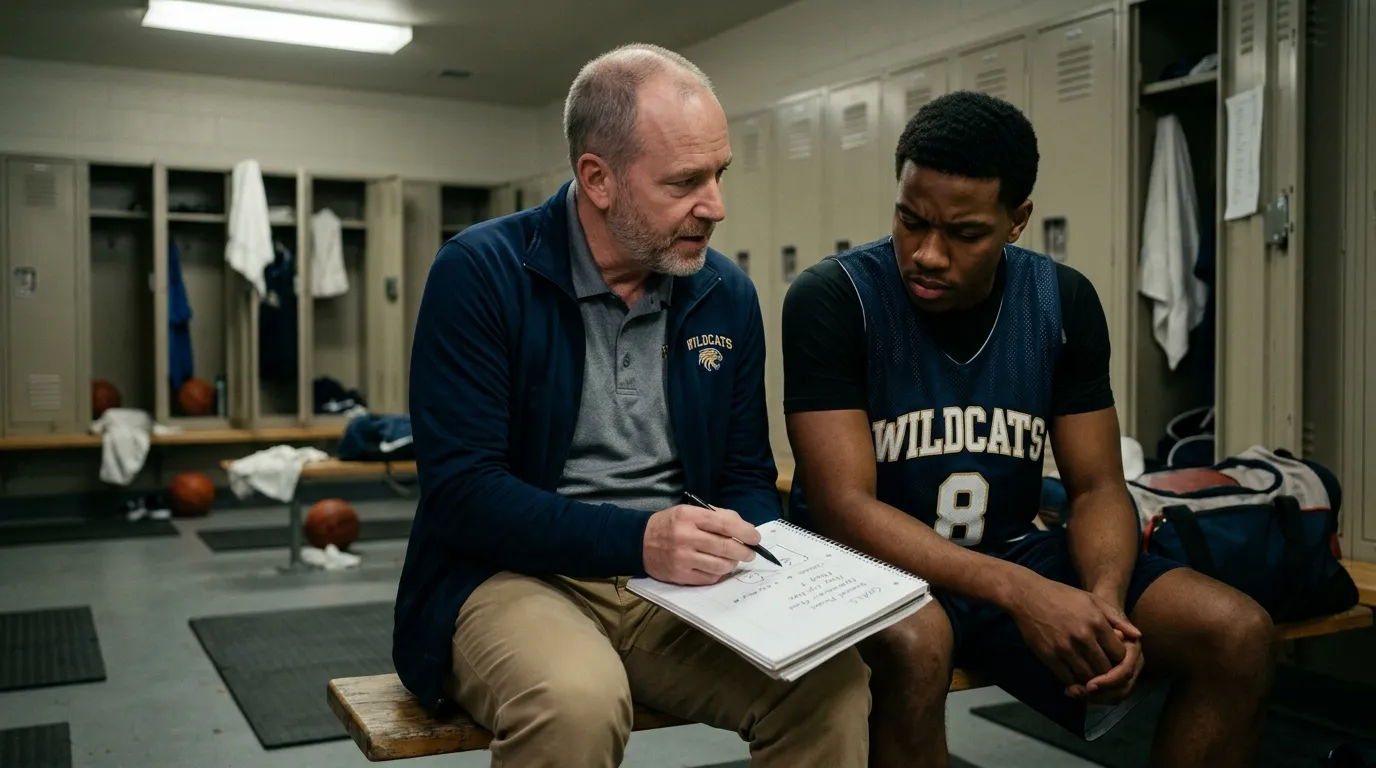
While the core principles of mental performance training apply universally, the way they show up differs meaningfully across basketball, tennis, and volleyball.
Basketball: Decision-Making and Composure in Flow
Basketball’s pace means mental performance challenges arrive rapidly and repeatedly. A turnover followed by an opponent’s run can shift momentum in seconds. Players must reset emotionally after mistakes while staying fully engaged in the next possession. High basketball IQ — the ability to read the game quickly and make smart decisions under pressure — is as much a mental skill as it is a tactical one.
Understanding how to maintain court awareness under fatigue and pressure is closely tied to mental training. If you want to develop that dimension of your game further, our article on basketball court awareness explores the mental and tactical side of reading the game like a pro.
Tennis: Managing Isolation and Momentum
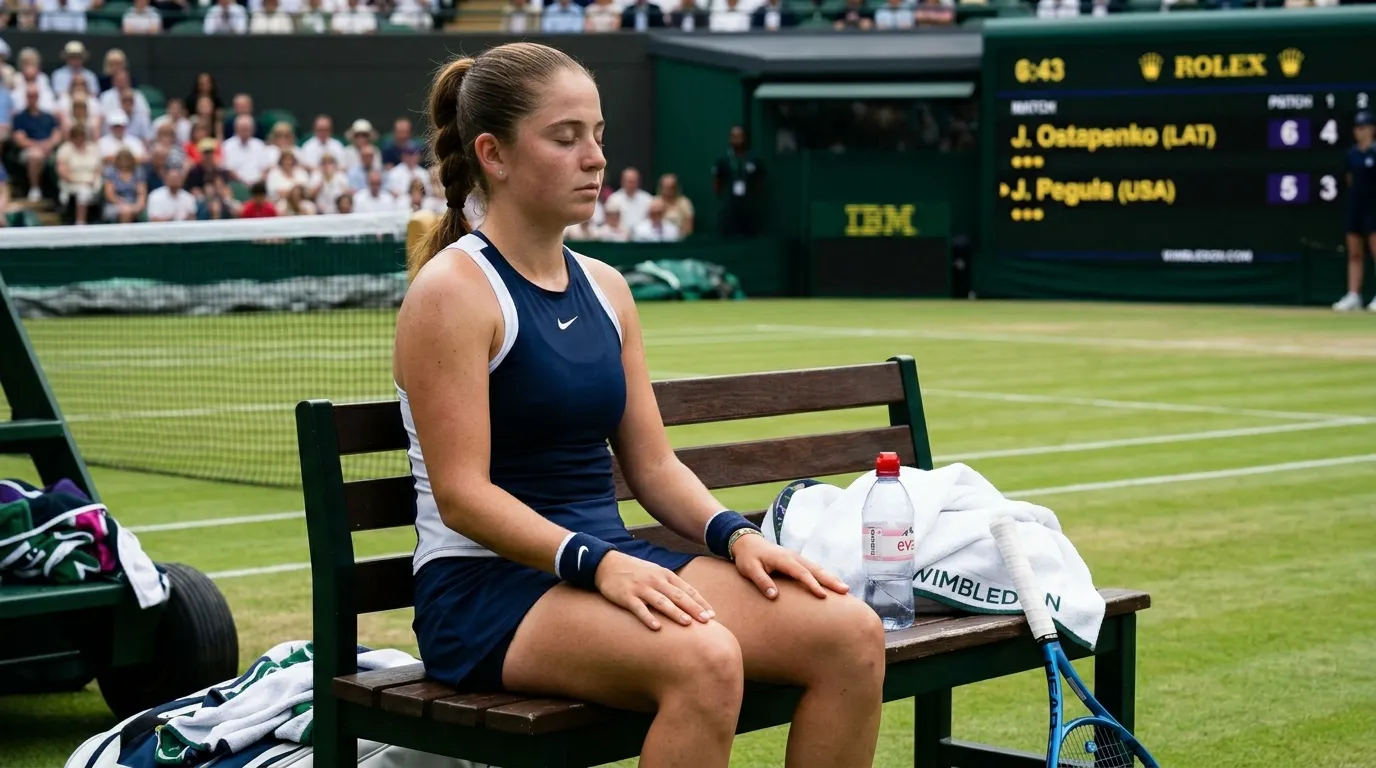
Tennis is unusual among court sports in that players compete alone, without teammates to lean on between points. Every error and every lost game must be processed individually and quickly. The mental demands of managing momentum swings — going from a missed break point to holding serve under pressure two minutes later — require well-developed emotional regulation and a reliable routine for resetting between points.
The changeover is tennis’s built-in mental reset opportunity. Top players use this time deliberately — not to review what went wrong, but to regulate their physical state, set a clear intention for the next game, and maintain consistent body language that reinforces confidence regardless of the score.
Volleyball: Communication and Collective Composure
Volleyball adds a layer that individual sports do not — collective mental performance. One player’s emotional state can shift the energy of an entire rotation. A team that communicates confidently, recovers quickly after errors, and maintains composure through runs of opponent momentum performs significantly better than one with equal physical skill but weaker collective mental habits.
The rule changes introduced in 2026 — including the elimination of mid-rally challenges — place even more emphasis on mental discipline and execution. Players cannot rely on stoppages to reset momentum. Mental toughness within the flow of play matters more than ever. For context on how the game itself is evolving, our article on volleyball’s 2026 FIVB rule changes covers what every competitive player needs to know.
Building a Mental Training Habit
Mental performance training is most effective when it is integrated into your existing routine rather than treated as a separate activity reserved for match days. Five to ten minutes of visualization before practice, a breathing reset between drills, and a brief reflection after sessions all add up to meaningful mental development over weeks and months.
Start with one technique — visualization or controlled breathing — and practice it consistently for two to three weeks before adding another. Mental skills are built through repetition and application in real competitive contexts, not through reading about them. The more you practice these techniques in low-stakes training environments, the more accessible they become when the pressure of real competition arrives.
The gap between the player you are in practice and the player you are in competition is almost always a mental gap. Close it deliberately, and your physical preparation will finally show up when it counts most. For more on how to train smarter across every dimension of your court game, explore our full Training and Performance section.