Three Sports, One Question: Where Do You Start?
Walk into any sports facility in 2026, and you will hear conversations about three sports more than almost anything else — tennis, padel, and pickleball. All three involve a racket, a ball, and a net. All three are growing in popularity. And if you are new to the world of court sports, they can look confusingly similar from a distance.
But spend even one session on a court for each, and the differences become immediately clear. These are three genuinely distinct experiences — each with its own strategy, physical demands, social culture, and learning curve. The sport that fits your personality, fitness level, and schedule may be very different from the one that suits your training partner or friend.
This guide breaks down the key differences between tennis, padel, and pickleball across every dimension that matters: court setup, rules, equipment, physical demands, and who each sport is truly built for. By the end, you will have a clear picture of which one deserves your court time — or whether the answer is all three.
If you are already exploring the broader world of court sports, our Court Sports Insights section covers the trends and developments shaping every sport in this space.
Tennis: The Classic Standard of Racket Sports
 Tennis is the original. With roots stretching back to 12th-century France and a formalized competitive structure that has shaped global sports for over a century, tennis remains the benchmark against which every other racket sport is measured. It is played on a rectangular court — 78 feet long and 27 feet wide for singles, or 36 feet wide for doubles — either indoors or outdoors, on surfaces ranging from grass and clay to hardcourt.
What Makes Tennis Unique
The serve is tennis’s defining weapon. An overarm serve can exceed 140 miles per hour at the professional level, and even at recreational play, mastering a reliable serve is one of the first significant technical challenges a new player must overcome. Rallies can be long and physically demanding, requiring players to cover a large court with explosive lateral movement and endurance.
Tennis scoring uses the familiar 15 – 30 – 40 game system. Sets are won by reaching six games with at least a two-game lead, and matches are typically best of three or best of five sets. The depth of tactical variation — from serve-and-volley to baseline grinding to drop shots and lobs — means tennis has virtually unlimited strategic complexity at higher levels.
Tennis Fitness and Calorie Burn
Tennis is one of the most complete physical workouts available in sports. A competitive singles match can burn between 575 and 775 calories per hour, demanding cardiovascular endurance, explosive sprinting, and full-body coordination simultaneously. Even a casual hitting session provides meaningful aerobic and anaerobic conditioning.
According to BetterMe Health, tennis develops cardiovascular fitness, quick reflexes, hand-eye coordination, and cognitive sharpness — making it one of the most well-rounded sports for full-body health. The physical demands are high, which is part of what gives the sport its depth and its reputation.
Who Tennis Is Best For
Tennis rewards players who enjoy a high physical challenge, appreciate individual skill development, and are willing to invest consistent practice time before enjoying the game at a satisfying level. It is the ideal choice for competitive athletes who want a sport with a rich tradition, global reach, and serious tournament pathways. If you are prepared for a steep learning curve and want to develop a technically precise skill set, tennis offers a lifelong journey of mastery.
Padel: Strategy, Walls, and Social Energy
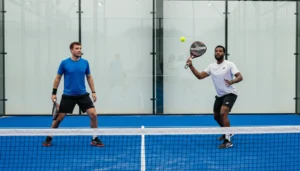
Padel was invented in Mexico in 1969 and spread rapidly through Spain and Latin America before beginning its global takeover in the past decade. Today, it is the fastest-growing racket sport in the world, with over 25 million players across 90 countries and more than 30,000 clubs in operation globally. In 2026, it is arriving in U.S. cities at an accelerating pace.
The Court and the Walls
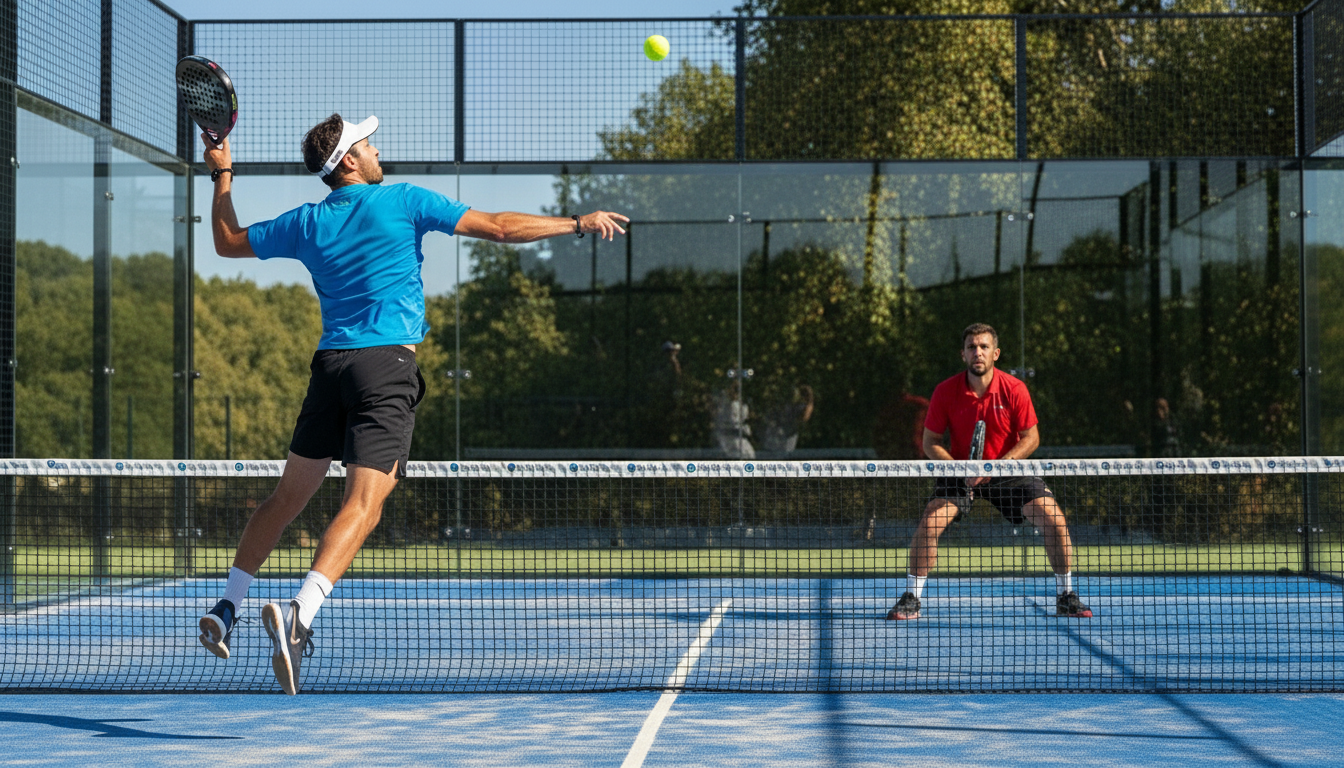
A padel court measures 20 meters long by 10 meters wide — roughly one-third the size of a tennis court. It is enclosed by glass walls and wire mesh fencing, and those walls are an active, legal part of play. After the ball bounces on the opponent’s side, it can rebound off the back glass and remain in play. Players can also exit the court through side doors to chase a ball that has gone out of bounds, returning it through the opening to keep the rally alive.
This wall play is the feature that makes padel feel unlike any other racket sport. Defensive shots transform into tactical opportunities. Balls that look like winners can come back into play off the glass. Learning to read and use wall angles is the skill that defines intermediate-level padel — and it takes time to develop, making the sport endlessly interesting.
Padel Rules and Scoring
Padel uses the same scoring system as tennis: 15 – 30 – 40 – game, with sets won at six games and matches typically best of three. One critical difference is the serve — in padel, all serves are underarm and must be struck at or below waist height after a single bounce. There is no overarm power serve. This levels the playing field and leads to longer, more engaging rallies from the very first point.
At the professional level in 2026, Premier Padel has introduced the star point — a single golden point played at deuce rather than the traditional advantage system, adding a knife-edge tension to crucial moments in matches. Padel is exclusively a doubles sport, always played two versus two, which shapes its social and tactical character entirely.
Who Padel Is Best For
Padel is built for players who love the strategic depth of tennis but want a more social, accessible, and immediately fun experience. If you have tried tennis but found the serve and long rallies frustrating early on, padel removes those barriers while still offering serious tactical complexity. It is also ideal for anyone who prioritizes playing with others — the doubles format means every session is a team experience.
Players who appreciate court awareness and spatial thinking will feel immediately at home in padel. The same skills that make a great basketball or tennis player — reading angles, communicating with teammates, anticipating movement — translate directly. You can read more about how court awareness shapes performance in our post on basketball court awareness, and you will find striking parallels with what padel demands.
Pickleball: Fast, Accessible, and Built for Everyone
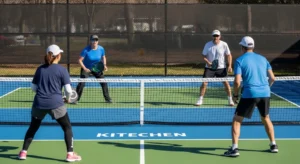
 Pickleball was invented in 1965 in Bainbridge Island, Washington, by three friends looking for a game the whole family could enjoy. It combines elements of tennis, badminton, and ping-pong, played on a compact court with a low net, solid paddles, and a perforated plastic ball. What began as a backyard pastime has grown into one of the fastest-growing sports in North America, with over 36 million Americans having played at least once and participation rising by more than 223 percent over the past three years.
The Court, Equipment, and Key Rules
A pickleball court measures 44 feet long by 20 feet wide — roughly the size of a badminton court and significantly smaller than both tennis and padel courts. There are no walls. The net stands 36 inches high at the posts and 34 inches at the center. The most distinctive feature of the court is the non-volley zone, commonly called the kitchen — a 7-foot area on either side of the net where players cannot volley the ball in the air.
The kitchen rule transforms pickleball’s tactical identity. Players cannot simply rush the net and put away volleys — they must wait for the right opportunity, engage in soft, low-bouncing exchanges called dinks, and patiently construct points through placement and precision rather than power. This makes pickleball uniquely accessible to older adults, beginners, and players who want a workout without the physical intensity of tennis.
Pickleball’s scoring system also differs significantly. Only the serving team can score points, and games are played to 11 — win by two. The score is represented by three numbers: the server’s score, the opponent’s score, and which server is up. While it sounds complex at first, most players find it intuitive within a session or two. According to the LTA Padel, pickleball’s straightforward structure is one of the primary reasons it has such a short learning curve compared to other racket sports.
Who Pickleball Is Best For
Pickleball is the most beginner-friendly of the three sports. The smaller court means less ground to cover, the slower ball is easier to track and control, and the rules — once understood — are clean and easy to follow. It is ideal for players of all ages and fitness levels, and particularly popular among older adults for whom the lower impact and shorter court are significant advantages.
It is also a natural fit for players who enjoy a social, community-oriented experience. Pickleball clubs tend to foster welcoming, casual environments where new players are matched with experienced ones, and socializing between games is part of the culture. If your priority is getting active, having fun, and connecting with other players without a steep technical investment upfront, pickleball delivers that experience immediately.
Side-by-Side Comparison: Tennis, Padel, and Pickleball
 Understanding the key differences side by side makes it much easier to identify which sport fits your situation. Here is how the three sports compare across the dimensions that matter most to a new player.
Court Size and Environment
Tennis uses the largest court — 78 by 27 feet for singles, open-air or indoor, with no walls. Padel uses a medium-sized enclosed court — 66 by 33 feet — surrounded by glass walls and mesh fencing that are live during play. Pickleball uses the smallest court — 44 by 20 feet — open and without walls, with a distinctive no-volley zone on either side of the net.
Equipment Differences
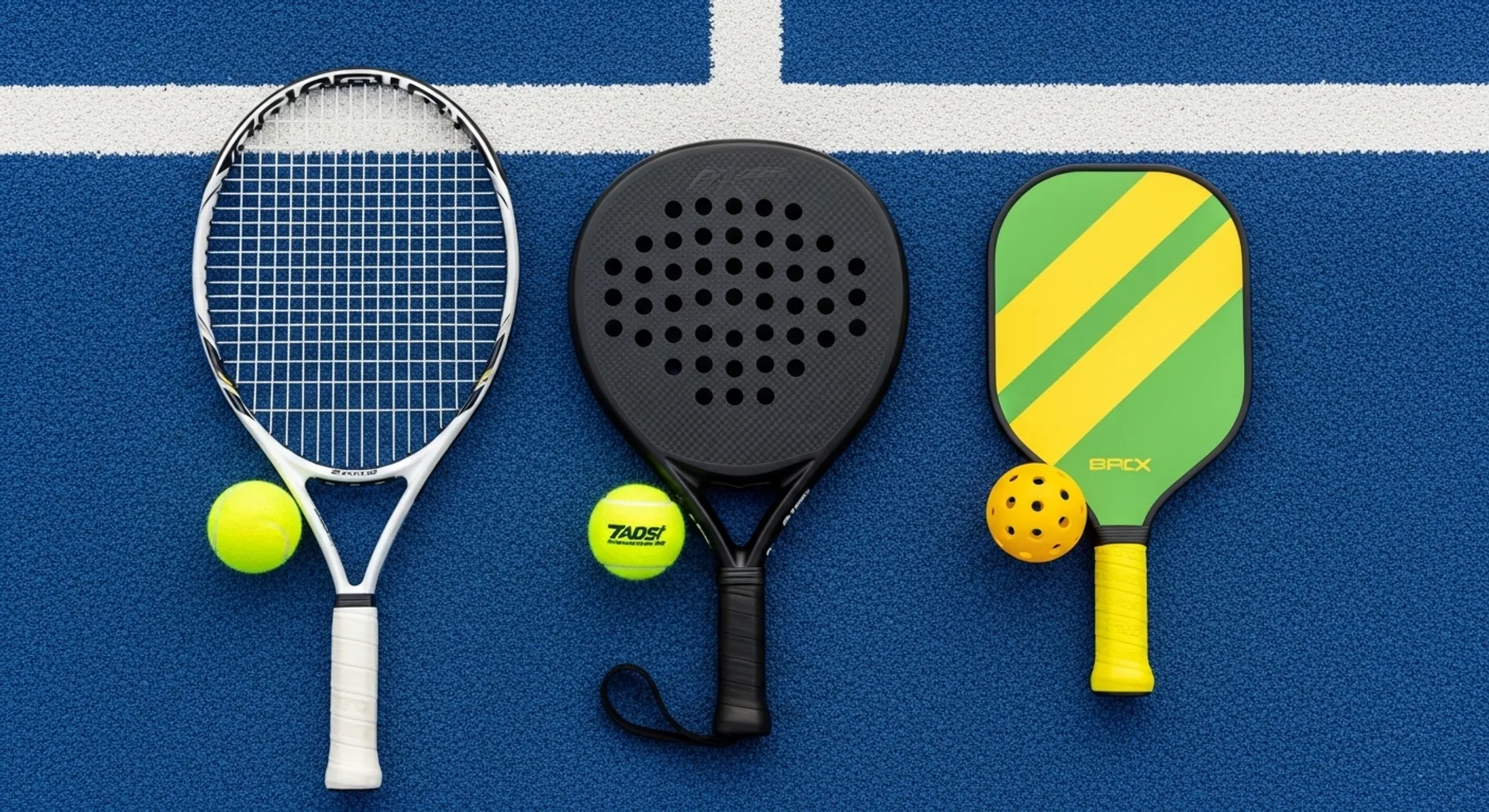
Tennis uses a strung racket approximately 27 inches long, generating significant power and spin. Padel uses a solid, stringless paddle with a perforated face — shorter and heavier than a tennis racket — built for control and wall play. Pickleball uses a solid paddle slightly larger than a ping-pong paddle, made from wood, graphite, or composite materials, designed for precision and soft touch. The balls differ just as dramatically: tennis uses a high-pressure felt ball, padel uses a slightly depressurized tennis-style ball, and pickleball uses a lightweight plastic ball with holes that behaves quite differently from either.
Learning Curve
Pickleball has the gentlest learning curve — most beginners are playing enjoyable rallies within their first session. Padel follows closely — the underarm serve removes one of tennis’s biggest technical barriers, and the walls keep rallies alive even on imperfect shots. Tennis has the steepest entry point, with the overarm serve, longer court, and heavier ball demanding more technical development before beginners feel truly comfortable.
Physical Demands
Tennis is the most physically demanding sport, requiring full-court coverage, powerful groundstrokes, and exceptional endurance across long matches. Padel is moderately demanding — the smaller court reduces running distances, but the enclosed environment creates intense, fast-paced exchanges and requires rapid directional changes. Pickleball is the least physically demanding, ideal for players seeking activity without high-impact strain, though competitive pickleball at higher levels still demands excellent reflexes and footwork.
Social Format
Padel is always doubles — two versus two — making it the most consistently social of the three. Pickleball is typically doubles but can be played singles. Tennis is most commonly singles, though doubles is widely played at recreational levels. If social connection and team play are priorities, padel and pickleball offer that atmosphere more naturally than tennis.
Which Racket Sport Should You Choose?
The honest answer is that all three sports are worth trying at least once — and many players end up enjoying more than one. That said, if you need a starting point, here is a practical guide based on what you are looking for.
Choose tennis if you want the most physically complete workout, are willing to invest time developing a technical skill set, and want access to the broadest competitive structure and global tradition. Tennis rewards serious, long-term commitment and offers a depth of mastery that few sports can match.
Choose padel if you love the strategic dimensions of tennis but want to start having fun faster, value the social energy of doubles play, and are drawn to a sport with explosive global momentum in 2026. Padel is ideal for players who want walls, angles, and teamwork at the core of every rally. Our detailed padel beginner’s guide is a great next step if you want to explore the sport further.
Choose pickleball if you want to start playing immediately with minimal technical barriers, prefer a lower-impact option suitable for all ages, or want to join one of the most welcoming and community-driven sports cultures in North America right now. Pickleball is the easiest on-ramp to a lifelong racket sport habit.
Whichever sport you choose, the fundamentals of court sports — reading the game, communicating with partners, developing your footwork, and training smart — will carry over. Explore our Training and Performance section for tips that apply across every court sport you play.