Why Everyone Is Talking About Padel Right Now
If you have been hearing the word “padel” more and more lately, you are not imagining things. This fast-paced, doubles racket sport has taken the world by storm, growing from a niche pastime into a global sporting movement with over 25 million players across 90 countries. In 2026, it stands as one of the most-searched and most-played court sports on the planet.
What makes padel so compelling is how quickly anyone can pick it up. Unlike tennis, which can take weeks before you sustain a decent rally, most beginners are having real fun within their very first session. The court is smaller, the walls keep the ball in play, and the doubles format means you are never alone out there.
If you love court sports — whether basketball, tennis, or volleyball — padel belongs on your radar. This guide breaks down everything you need to know to understand the sport, get started, and decide whether padel might be your next great passion.
What Is Padel, Exactly?
 Padel is a doubles racket sport played on an enclosed court roughly one-third the size of a standard tennis court. It blends elements of tennis and squash — the scoring system and net setup mirror tennis, while the glass walls that surround the court function much like squash, making them an active and legal part of every rally.
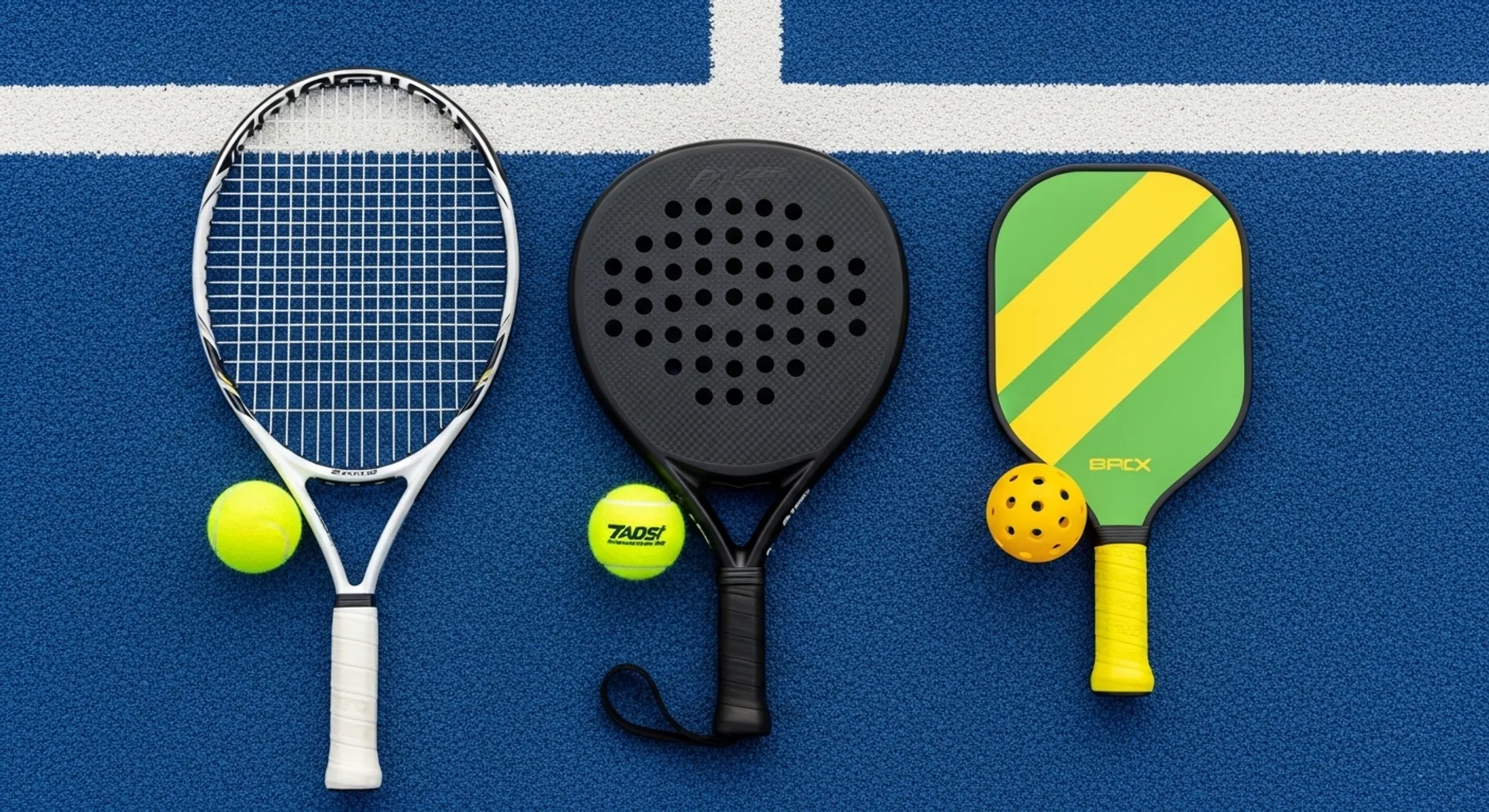
Players use a solid, stringless racket — shorter and heavier than a tennis racket — and a low-pressure ball similar to a tennis ball but with slightly less bounce. Every match is played as doubles, two players per side, which adds a layer of communication, strategy, and social energy that sets it apart from most other racket sports.
Where Did Padel Come From?
Padel was invented in 1969 in Acapulco, Mexico, by Enrique Corcuera, who enclosed a section of his property with walls to create a new type of court. His Spanish friend Alfonso de Hohenlohe discovered the game and brought it to Marbella, Spain, where the first two official padel courts in Europe were built in 1974.
From Spain, the sport spread rapidly through Spanish-speaking countries, particularly Argentina, before slowly finding its footing across Europe and the Americas. Today, padel is the second most popular sport in Spain — behind only football — and is actively lobbying for inclusion in the 2032 Brisbane Olympics.
How Is Padel Different From Tennis?
While the two sports share a scoring system and a net, they are genuinely different experiences. In tennis, the serve is a dominant weapon — powerful, fast, and often decisive. In padel, the serve is underarm and must be struck at or below waist height, which levels the playing field and leads to much longer, more engaging rallies.
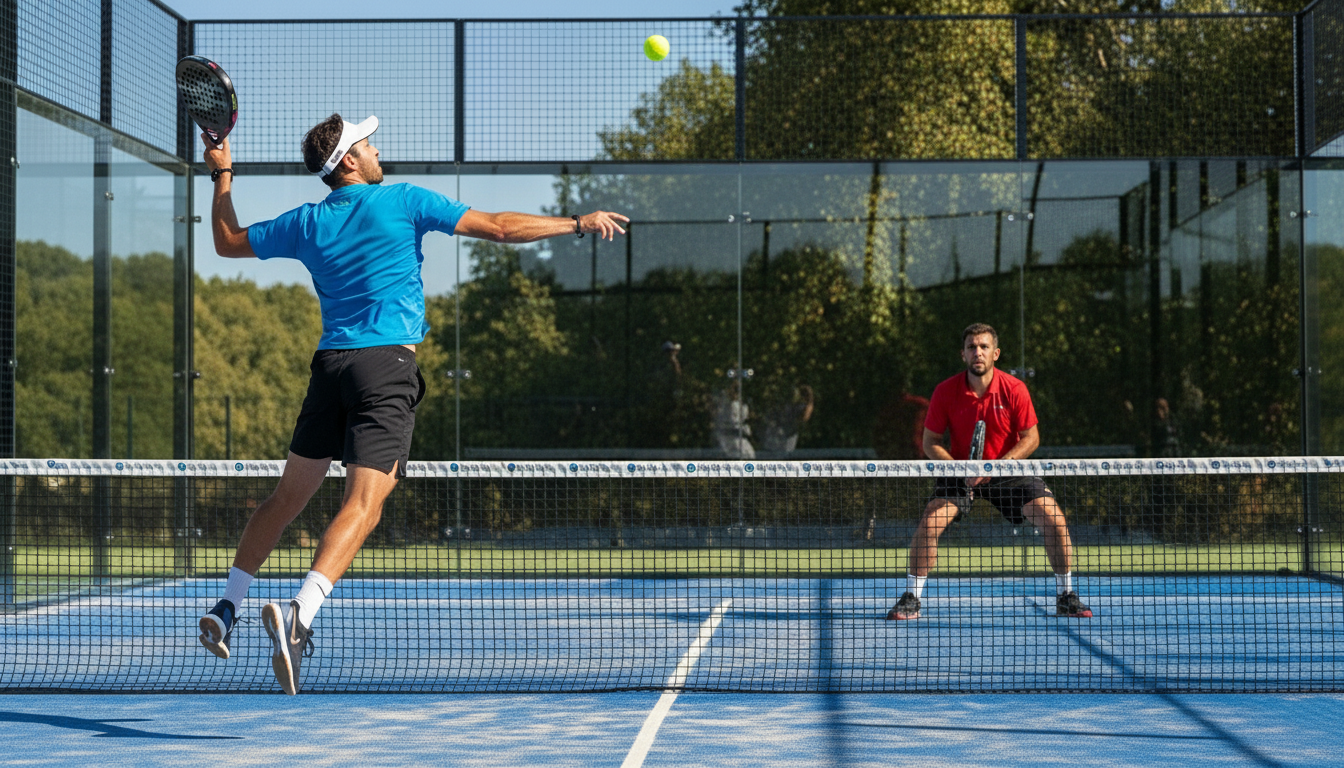
The enclosed court with glass walls means the ball stays in play far longer. A ball can bounce off the back glass and return into the court, which is not only legal but forms the tactical backbone of the game. This transforms defensive shots into creative opportunities and keeps beginners involved in every rally rather than watching the ball fly past them.
If you are already a tennis fan and want to explore what the sport has to offer beyond the baseline, padel is a natural and deeply satisfying next step. You can also discover how tennis compares with other court sports in our Court Sports Insights section.
Understanding the Padel Court
One of the first things that strikes new players is the court itself. Compact, enclosed, and visually striking — the padel court is unlike anything else in sport.
Court Dimensions and Layout
A standard padel court measures 20 meters long by 10 meters wide. The net in the center stands 88 centimeters high at the middle and 92 centimeters at the posts — slightly lower than a tennis net. Each side of the court is divided into two service boxes by a center line, just as in tennis.
The back walls are made of tempered glass panels standing 3 meters high, topped by 1 meter of wire mesh fencing — a total rear wall height of 4 meters. The side walls feature a combination of lower glass panels and upper mesh fencing. All walls are live during play after the ball bounces, which is the defining feature of the game.
How the Walls Change Everything
The glass walls are not just a safety boundary — they are a tactical weapon. A well-placed shot can angle off the back wall and land in a completely unexpected location, making defense far more exciting than in conventional racket sports. Learning to read wall angles is what separates a beginner from an intermediate player.
Players can also exit the court through small doors on either side to chase a ball that bounces out of bounds — returning it through the opening to keep the rally alive. This unusual rule adds a unique level of hustle and spectacle that padel crowds love.
Padel Rules: What You Need to Know
 Padel’s rules are straightforward enough to learn in a single session. Here is a clear breakdown of the core rules every new player must understand before stepping on court.
How to Serve in Padel
All serves in padel are underarm. The server must let the ball bounce once on the ground before striking it, and the contact must happen at or below natural waist height. At least one foot must remain on the ground during the serve, and the server must stand behind the service line.
The ball is served diagonally — from the right side of the court into the opponent’s right service box, exactly as in tennis. Like tennis, players get two serve attempts per point. A serve that clips the net but still lands in the correct box is a let, and the serve is replayed.
One key rule: if a serve bounces in the correct box and then hits the back glass wall, the serve is valid and the rally begins. However, if the serve hits the wire cage directly without bouncing, it is a fault.
Rallying and Ball-in-Play Rules
During a rally, every shot must clear the net and bounce on the opponent’s side before touching any wall. If a ball hits the opponent’s glass wall directly without bouncing first, the hitting team loses the point. Once the ball has bounced legally, it may rebound off one or more walls and remain in play — and the defending player can use those wall rebounds to make their return.
Players are allowed only one bounce before they must return the ball. If it bounces twice on their side, the opposing team wins the point. Touching the net at any time during a rally immediately ends the point for that team.
Padel Scoring System
Padel uses the identical scoring system as tennis: 15, 30, 40, and game. At 40-40, which is called deuce, traditional rules require winning two consecutive points to win the game. However, at the professional level in 2026, Premier Padel has introduced the “star point” or golden point — a single decisive rally played at deuce, with the receiving team choosing which side they receive from.
Sets are won by the first team to reach six games with at least a two-game lead. If the score reaches 6-6, a seven-point tiebreak is played. Matches are typically best of three sets, with a recreational match lasting 60 to 90 minutes.
According to the LTA Padel, padel’s scoring system is one of the reasons tennis players adapt to it so quickly — the structure is already familiar, allowing new players to focus on the tactical and technical differences rather than learning an entirely new framework.
Equipment: What Do You Actually Need?
One of padel’s great advantages as a beginner sport is the accessibility of its equipment. You do not need to invest heavily to get started.
The Padel Racket
A padel racket is a solid, stringless paddle with a perforated face and a foam core. It is shorter and thicker than a tennis racket, weighing between 350 and 390 grams. Beginners should look for a round-shaped racket with a soft EVA core and fiberglass face — this combination maximizes the sweet spot, absorbs vibration, and makes off-center hits more forgiving.
Every padel racket must have a wrist safety strap, and using it is mandatory during play. Entry-level rackets are widely available from $60 to $120 and are perfectly capable for learning the game. Most clubs also rent rackets for your first sessions, so you can try before you buy.
Padel Balls and Footwear
Padel balls look nearly identical to tennis balls but are slightly less pressurized, giving them a lower bounce that suits the smaller court. They typically bounce between 135 and 145 centimeters when dropped from 2.54 meters. This reduced pressure also makes them easier to control for beginners.
For footwear, court shoes with good lateral grip are essential. Tennis shoes work well, but dedicated padel shoes — designed specifically for the abrupt side-to-side movements the sport demands — provide even better ankle support and traction on the court surface.
What to Expect at Your First Session
Most clubs provide balls and rent rackets for casual players and beginners. For your first session, you only need athletic clothing, proper court shoes, and a willingness to make mistakes. A beginner group lesson — typically 60 minutes — will teach you the underarm serve, basic positioning, and how to use the walls. Most players are sustaining enjoyable rallies by the end of their first session.
Why Padel Is the Perfect Next Court Sport
 If you already play or love watching basketball, tennis, or volleyball, padel fits naturally into the court sports world you already know. It rewards court awareness, communication, and smart positioning — the same qualities that make great players in every court sport.
Padel Is Built for All Skill Levels
One of padel’s defining qualities is its inclusivity. The smaller court means less ground to cover, the doubles format shares the load across two players, and the walls keep rallies alive even on imperfect shots. Beginners feel engaged from the very first point, which is far less common in sports like tennis, where power and technical precision can overwhelm a new player early.
At the same time, padel rewards mastery. Reading wall angles, placing shots precisely to create openings, and coordinating with your partner through fluid communication — these are skills that take years to perfect. The learning curve is gentle at the start and then stretches as far as you want to take it.
The Social Side of Padel
Padel is always doubles, which means it is inherently a social sport. You play with a partner, against a pair, and the compact court keeps all four players in constant motion and communication. Many clubs have open social sessions where solo players are matched with partners, making it easy to walk in, find a game, and walk out with new friends.
This social nature is one of the key drivers behind the sport’s extraordinary growth. Unlike gym workouts, running, or even tennis, padel feels like a shared experience every single time you step on court. Building your court IQ — the ability to read what is happening and anticipate what comes next — is something padel players work on constantly, in a way that mirrors the mental demands explored in our post on basketball court awareness.
Padel’s Global Momentum in 2026
The numbers behind padel’s growth are difficult to ignore. There are now over 30,000 padel clubs operating globally. Major sports brands — Nike, Adidas, and Wilson — have all launched dedicated padel product lines. Professional leagues like Premier Padel have secured television deals, and cities across the United States are seeing dedicated padel facilities open in New York, Miami, Los Angeles, and Chicago.
Federations are actively lobbying the International Olympic Committee for inclusion in the 2032 Brisbane Games. The International Padel Federation now has members across more than 130 countries. This is not a passing trend — padel is reshaping how the world thinks about racket sports and court sports more broadly.
For deeper insight into how the court sports landscape is evolving, visit our Court Sports Insights category, where we track developments across every sport in the court sports family.
How to Find a Padel Court and Get Started
Getting on a padel court has never been easier. Here are the practical steps to go from curious beginner to regular player.
Finding a Court Near You
Search for padel clubs in your city or use a court-finding app to locate the nearest facility. Many tennis clubs and sports centers have converted courts or added dedicated padel courts. In urban areas, dedicated padel-only venues are opening at a rapid pace, often with amenities like social areas, café spaces, and organized league nights.
The International Padel Federation is a reliable starting point for locating official clubs and events in your country. Most clubs offer introductory sessions specifically designed for first-time players, often at reduced cost.
Your First Steps on Court
Book a beginner group session or, if your club offers it, an open social session for new players. Arrive 10 to 15 minutes early to get comfortable with the court dimensions and the feel of the racket. Focus your first session on the serve, basic volleying at the net, and learning how to track balls that rebound off the back glass.
Do not worry about power. Padel rewards control, placement, and patience far more than it rewards raw hitting strength. Experienced players will tell you that their biggest improvement came from learning to slow down, read the walls, and trust their partner — not from swinging harder.
Is Padel Right for You?
If you are drawn to court sports, enjoy doubles formats, and want a sport you can learn quickly but spend a lifetime mastering, the answer is almost certainly yes. Padel bridges the gap between the strategic depth of tennis and the social energy of a team sport — and it does so in a compact, exciting, endlessly replayable package.
Whether you are brand new to racket sports or a seasoned tennis player looking for your next challenge, padel offers something genuinely different. The court is smaller, the walls change everything, and the community around the sport is growing faster than almost anything else in the world of court sports right now.
Step on the court, hit a few rallies, and you will understand immediately why 25 million players across 90 countries are completely hooked. For more guides on building your skills across court sports — from training and performance tips to the latest volleyball rule changes — explore everything Court City Sports has to offer.