Shooting is the most important individual skill in basketball. It does not matter how fast you are, how well you dribble, or how good your court vision is — if you cannot convert scoring opportunities consistently, every other skill loses its value. And yet, shooting is one of the most misunderstood skills in the game. Players spend hours chucking up shots without fixing the mechanical issues that are causing them to miss, ingraining bad habits that become harder to correct with every repetition.
The good news is that great shooting is not a gift reserved for naturally talented players. It is built through an understanding of proper mechanics, deliberate repetition, and a structured approach to practice. This guide breaks down every foundational element of basketball shooting — from hand placement to follow-through — and gives you the specific drills to build consistency, range, and confidence in your shot.
Why Shooting Mechanics Matter More Than Natural Talent
Watch any elite shooter — at the high school, college, or professional level — and you will notice that while their styles may differ slightly, their core mechanics follow the same foundational principles. The stance, the grip, the alignment, the release, the follow-through — these are not arbitrary preferences. They are the product of biomechanical efficiency developed through repetition.
According to Breakthrough Basketball’s shooting fundamentals guide, great shooters may have slightly different styles, but almost all follow the same foundational mechanics — and the key to building a consistent shot is mastering these fundamentals before worrying about range or speed. Every great shot begins with proper mechanics. Once a player develops bad habits, they are incredibly hard to fix later — which is why building the right foundation from the start is far more important than the volume of shots taken without mechanical awareness.
The players who improve the fastest are not those who shoot the most. They are those who shoot with intention, understand what correct mechanics feel like, and use deliberate practice to build the muscle memory that makes those mechanics automatic under game pressure.
The Core Mechanics of Proper Shooting Form
Every element of shooting form works in sequence — one step flows into the next, and a breakdown anywhere in the chain affects the quality of the final shot. Here is how to build each component correctly from the ground up.
Stance and Balance
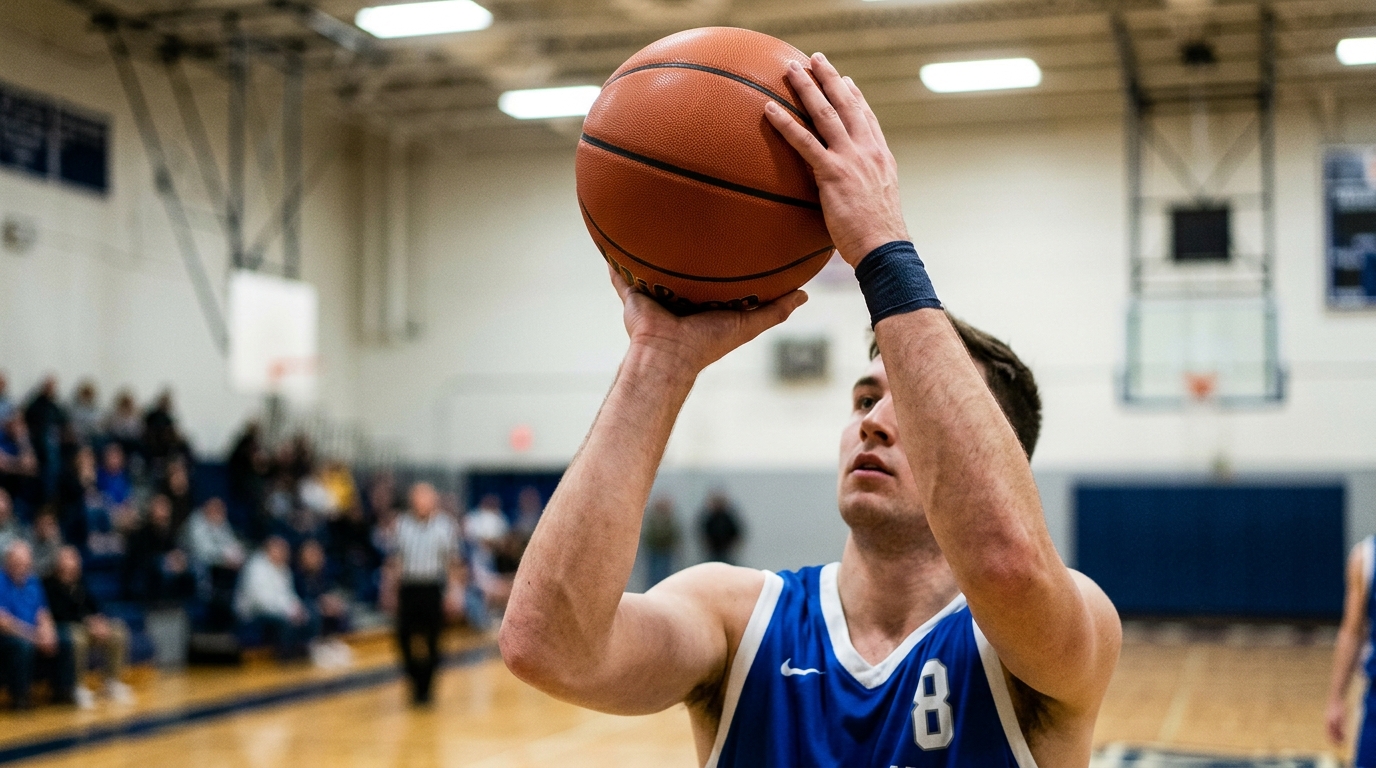
Your shot begins before you touch the ball. A balanced, athletic stance creates the foundation everything else is built on. Stand with your feet roughly shoulder-width apart, with your shooting-side foot slightly forward — pointed toward the basket. Your knees should be softly bent, your weight balanced evenly across the balls of both feet, and your core engaged.
This stance loads your legs for the upward drive that generates power in your shot. Players who stand flat-footed or with their weight on their heels cannot use their lower body efficiently — they end up relying entirely on their arms for power, which reduces both consistency and range. Before every shot attempt in practice, check your stance deliberately. Over time, it becomes automatic.
Hand Placement and Grip
Hand placement is one of the most commonly incorrect elements of shooting form — and one of the most impactful to fix. Your shooting hand goes beneath the ball, fingers spread wide and relaxed, with the ball resting on your finger pads — not your palm. There should be a small gap between the ball and the heel of your shooting hand. This gap allows the ball to roll off your fingertips naturally at release, giving you control over spin and direction.
Your guide hand rests lightly on the side of the ball — its only job is to stabilize the ball during the shot preparation. It does not push or contribute to the release. One of the most common shooting errors at every level is the guide hand thumb flicking into the ball at the moment of release, which causes the shot to spin sideways and miss left or right. Practice keeping your guide hand still and lifting it away cleanly as the ball leaves your shooting hand.
The Shot Pocket and Alignment
The shot pocket is where you hold the ball before initiating your shooting motion — typically at chest to waist height on your shooting side. From the shot pocket, your shooting elbow should be directly beneath the ball, pointing toward the basket. This elbow-under-ball alignment is the single most important mechanical checkpoint in your shot. When your elbow is in, your wrist, forearm, and release all naturally align toward the target. When your elbow flares out, the ball tilts sideways and the release becomes inconsistent.
Check your elbow position in every form shooting session. If it consistently drifts out, widen your grip slightly or lower your shot pocket — both adjustments bring the elbow back under the ball naturally.
The Upward Drive and Release
Your shot is powered by your legs, not your arms. As you initiate the shooting motion, drive upward through your legs while simultaneously extending your shooting arm toward the basket. The ball should leave your hand at or near the peak of your jump — not before you leave the ground and not after you have started descending.
At the moment of release, your wrist snaps forward and down — often described as reaching into a cookie jar on a high shelf. Your fingers should be pointing toward the floor at full extension, and your arm should hold that follow-through position until the ball reaches the basket. A consistent follow-through is one of the clearest indicators of a mechanically sound shot — if your follow-through varies widely from shot to shot, your release mechanics need attention.
Arc and Target
A well-shot basketball has a medium-to-high arc — typically between 45 and 55 degrees at the peak. A flat shot with low arc has a narrow margin for error at the rim. A higher arc increases the effective size of the hoop the ball can fall through, giving you more room for slightly off-target shots to still find the net.
For your target, most shooting coaches recommend focusing on the back of the rim — the point where the net meets the back of the hoop. Aiming at the back rim naturally produces the slight overshoot tendency that results in soft, high-percentage shots rather than short shots that hit the front rim and bounce away.
Essential Shooting Drills to Build Consistency
Understanding mechanics is the first step. Building them into reliable muscle memory requires specific, progressive drills practiced with consistent focus. These are the most effective shooting drills for players at every level.
Form Shooting — The Foundation Drill
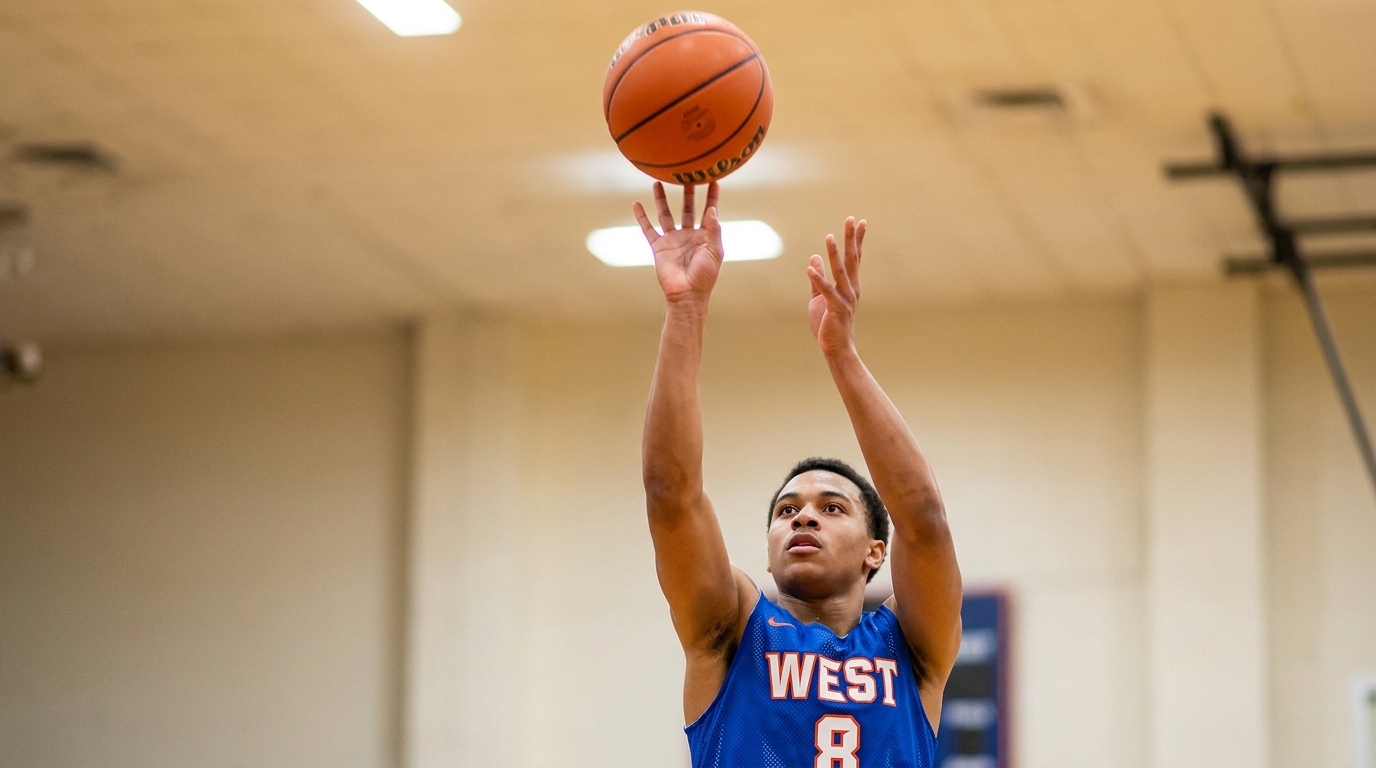
Form shooting is the most important drill in any shooter’s practice routine. Stand two to four feet directly in front of the basket and shoot with one hand — your shooting hand only, no guide hand. This isolates your shooting mechanics and forces you to feel exactly how the ball leaves your fingers.
Take 20 to 30 one-handed shots focusing entirely on your release and follow-through. Then add your guide hand and take another 20 to 30 shots at the same close range, maintaining the same mechanics. Only move back when your shots from the current distance feel automatic and look mechanically clean. Form shooting done slowly and correctly at close range builds more lasting improvement than a hundred rushed shots from the three-point line.
Elbow Shooting Drill
This drill builds mid-range consistency and reinforces footwork into your shot. Start at one of the two elbow positions — the junction of the free throw line and the lane line on either side of the paint. Catch a pass or pick up a stationary ball, set your feet toward the basket, and shoot. After each make or miss, move to the other elbow and repeat.
The elbows are among the most important spots on the court — they appear regularly in pick-and-roll coverage, post feed kickouts, and drive-and-kick situations. Building confidence and consistency from these spots directly translates to game-situation scoring opportunities.
Catch-and-Shoot Spot Drill
Set up five spots around the perimeter — both corners, both wings, and the top of the key. Have a partner pass you the ball at each spot, or use a ball return and throw the ball off the backboard to simulate a pass. Catch with your feet already set in your shooting stance and release immediately — the goal is to minimize your gather time while maintaining full mechanical control.
Track your makes and misses from each spot across multiple sessions. Identifying which spots you shoot best and worst from gives you specific data to direct your practice toward — which is how deliberate practice actually accelerates improvement rather than just maintaining your current level.
Off-the-Dribble Pull-Up Drill
Game shooting almost always involves movement — coming off screens, pulling up from drives, or shooting off the catch after relocating. This drill develops the footwork and timing to transition cleanly from dribbling to shooting without disrupting your mechanics.
Start at the top of the key with one dribble, take one hard dribble to either side, plant your inside foot, step into your shooting stance, and shoot. Repeat to both sides. Progress to two dribbles, then to side-step pull-ups coming off the wing. The key is planting your inside foot first — this is the footwork that keeps your momentum from carrying forward through the shot and pushing it long.
Free Throw Routine Building
Free throws are the purest test of shooting mechanics because there is no defender and no time pressure — just you, the ball, and the basket. Developing a consistent pre-shot free throw routine reinforces your mechanics and trains the mental composure needed to hit free throws in pressure moments.
Shoot at least 20 free throws per practice session with a fixed routine — the same number of dribbles, the same breath, the same visual target, every single time. Consistency in the routine trains consistency in the shot. For more on building the mental side of your free throw execution and composure under pressure, our guide on mental performance training for court sports athletes covers the psychological skills that make a real difference at the line when the game is on the line.
Common Shooting Mistakes and How to Fix Them
Even players who understand proper mechanics fall into predictable mechanical errors under fatigue or game pressure. Identifying and correcting these mistakes early prevents them from becoming permanent habits.
Shooting Off Balance
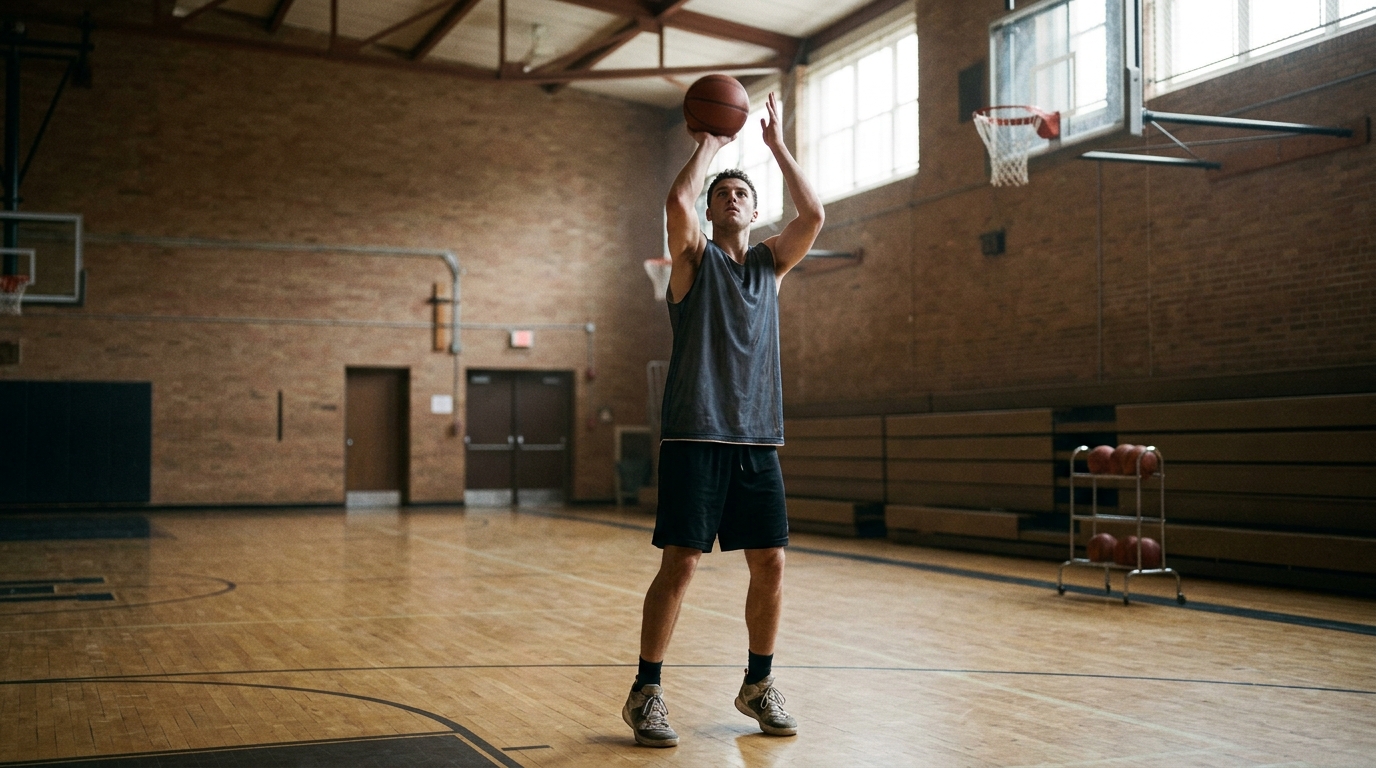
The mistake: The shot consistently drifts left, right, or long because the player’s weight is not centered at the moment of release.
The fix: Return to form shooting at close range with deliberate attention to your stance before each shot. Record yourself shooting from the side and behind — balance errors are often invisible to the shooter but obvious on video. Check that your feet are pointed toward the basket, your weight is even, and your knees are bent before initiating the shooting motion.
The Guide Hand Thumb Flick
The mistake: The ball consistently spins sideways at release, causing shots to miss left or right with a horizontal spin rather than the ideal backspin. This is almost always caused by the guide hand thumb pushing the ball at release.
The fix: Return to one-handed form shooting to re-establish your shooting hand mechanics without guide hand interference. When you reintroduce the guide hand, focus on holding it perfectly still and lifting it away cleanly the moment your shooting motion begins. Some players find it helpful to practice with only two fingers of the guide hand touching the ball — just enough to stabilize it, not enough to accidentally push it.
Fading Backward on Jump Shots
The mistake: The player’s momentum carries them backward during the jump, causing them to consistently short the shot and lose power and accuracy.
The fix: Focus on jumping straight up — not backward — on every shot. Your weight should be balanced forward when you leave the ground, not leaning back. This error often develops when players try to create separation from defenders by fading away unnecessarily. Practice shooting with your back against a wall during form shooting — you physically cannot fall backward, which trains the straight-up jump pattern into your mechanics.
Building a Shooting Practice Routine That Actually Works
The difference between players whose shooting improves and those who stay stuck is almost always the quality of their practice routine — not the volume of shots taken. According to the USA Basketball Coaching Guide for All Levels, effective player development requires purposeful repetition with clear mechanical goals — not just high-volume shooting without structure.
A practical daily shooting routine for developing players should begin with 15 to 20 minutes of form shooting and mechanic-focused work at close range, followed by 15 minutes of spot and movement shooting at game range, and finish with 10 minutes of game-situation shooting — pull-ups, free throws, and contested catch-and-shoot reps. That 40 to 45 minutes of structured practice will produce more lasting improvement than two hours of random shooting.
Track your percentages from specific spots over time. Week-on-week data tells you whether you are actually improving or just going through the motions. Players who track their numbers improve faster because they can see which areas need more attention and which drills are producing real results.
Shooting does not improve by accident. It improves through mechanical understanding, deliberate repetition, and honest tracking of results over time. Build the foundation correctly — stance, grip, alignment, release, follow-through — and then take those mechanics into game-speed drills that challenge you to reproduce them under pressure. That combination is what builds shooters that defenders genuinely fear. For more training guides covering every dimension of your court game, explore our Basketball Fundamentals section and our full Training and Performance resources, including our guide on basketball court awareness to sharpen both your scoring and your decision-making on the floor.