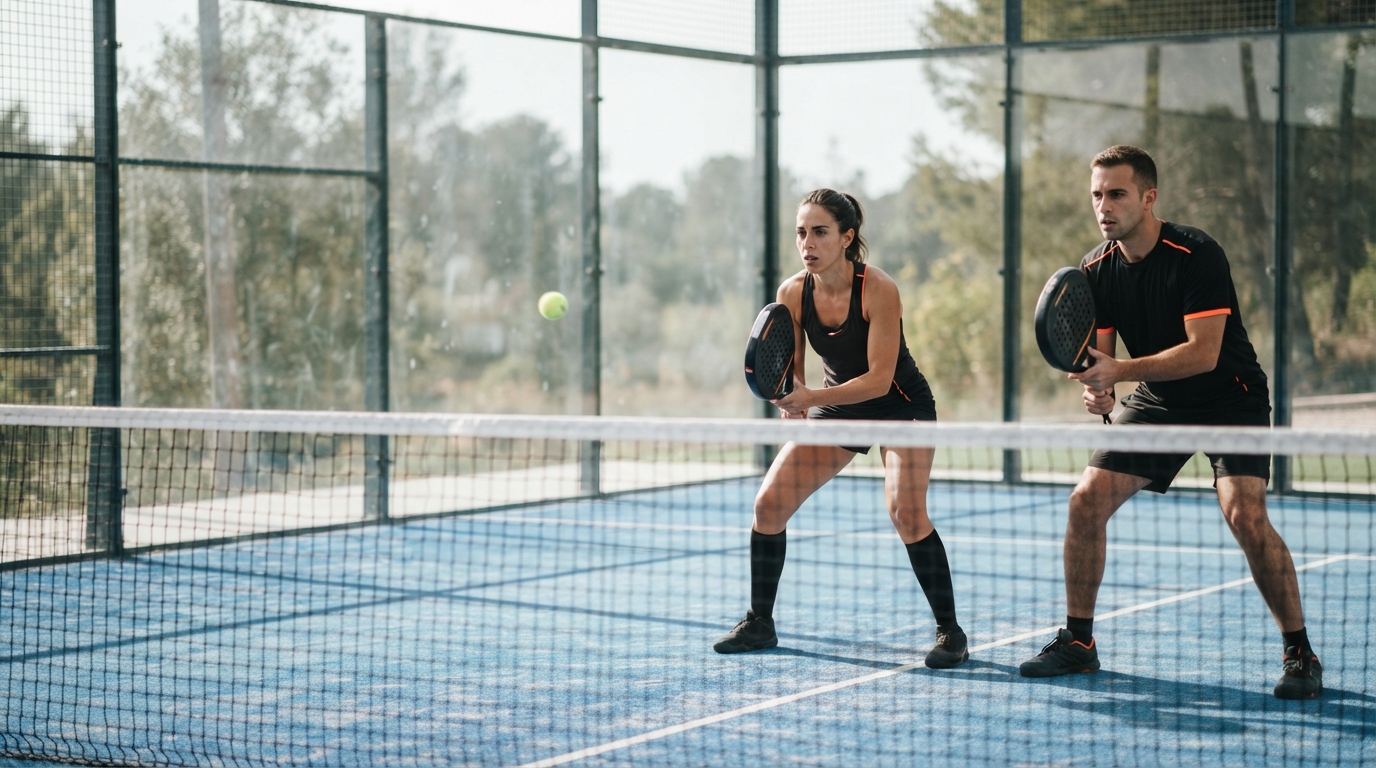
In padel, a connected pair wins more points. The compact court and glass walls allow opponents to exploit space between partners. That is why padel partner positioning is useful for developing players. Good positioning gives your team time, clear responsibilities, and better options.
If you are new to the sport, start with our padel beginner’s guide for court, scoring, and basic rules. This article takes the next step: moving through defense, transition, and attack without leaving your partner exposed.
Play as One Moving Pair
Every movement affects your partner. When one player runs forward while the other stays deep, the team becomes stretched. When one player chases a wide ball and the partner does not shift across, the middle opens. The goal is not to stand in the same place. It is to maintain a compact shape that protects useful space.
Use the ball as your guide. When opponents play toward a side wall, both partners shift that way. The player nearest the ball prepares to play it. The partner moves across to protect the middle and become the next option. When the ball moves back toward the center, both players recover to a balanced position.
Padel shares doubles principles with other racket sports, but its glass changes the timing. Our guide to tennis, padel, and pickleball explains how legal wall rebounds can keep a rally alive. That rebound creates time to recover only when both partners read the shot and communicate.
Use three practical court zones
Think of your side in three zones: defense near the back glass, transition in the middle, and attack near the net. The best position changes during the rally. Do not treat the net as a place you must reach at all costs. Treat it as a position you earn when your shot makes an opponent defend.
Build a Reliable Defensive Base
Give yourself room to read the glass
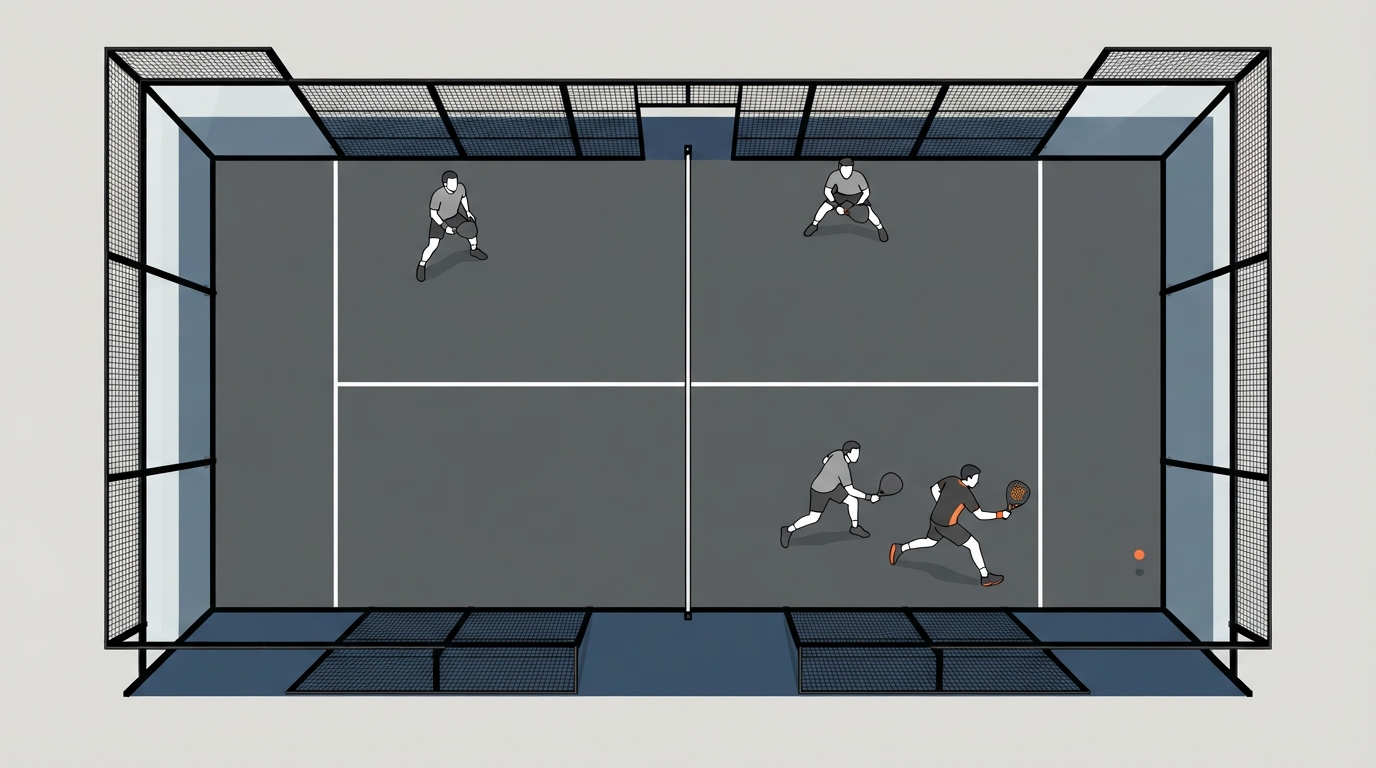
When opponents control the net, return the ball safely and regain a neutral position. Stand with enough distance from the back glass to judge whether the ball will rebound. If you crowd the wall, it can get behind you. If you stand too far forward, a deep ball can force a rushed backward movement.
Use a low, balanced stance with the racket in front. Let a difficult ball bounce when that gives you a more controllable contact. A patient defensive return is often better than attempting a winner from an awkward position. The International Padel Federation’s official Rules of Padel explain the enclosed 10-by-20-metre court and the legal role of walls. Use the current rules for match requirements, while treating this positioning advice as coaching guidance.
Cover the middle before corners
Most pairs lose more points through the middle than through a spectacular sideline winner. When your partner retrieves a wide ball, slide toward the center rather than watching from your original position. This protects the highest-value space and prepares you for a ball that returns through the middle.
Use short calls: “mine,” “yours,” and “switch.” Make them early. Clear communication helps players remain calm when rallies speed up, a skill explored in our guide to mental performance training for court sports athletes.
Move Forward With the Right Ball
Transition play sits between defending and attacking. Many developing players move forward because they want the net, not because their shot created time. A low, fast ball can trap you in the middle. A high, deep lob can give both partners a chance to advance.
Use the lob to change the point
A controlled lob forces net players to turn, move back, and play an overhead. That moment can allow your team to move forward as a pair. Watch the opponent’s response, take small controlled steps, and split step as the overhead is struck. The lob does not need to be a winner. Its value is usually the time it creates.
When the ball is low in the middle of the court, reset rather than force an attack. A controlled ball toward opponents’ feet can limit options. Choose based on your balance, ball height, and partner’s position.
Own the net together
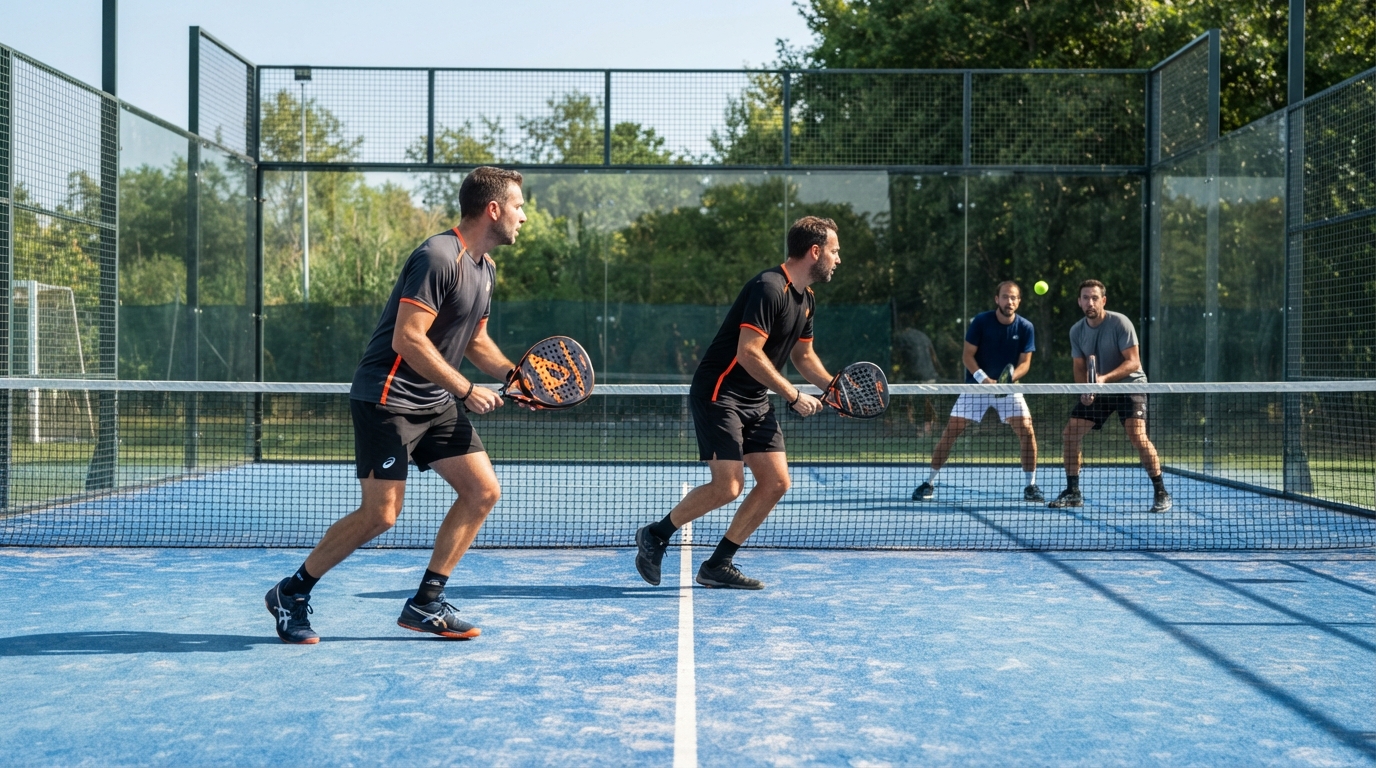
When your team reaches the net, maintain a compact line. Stay close enough to protect the middle and support each other, while leaving room to react wide. If opponents play crosscourt, both players shift that way. After a volley or overhead, recover beside your partner instead of admiring the shot.
Choose control before power. Aim a volley toward an opponent’s feet or use a softer ball to draw a player forward. A bandeja-style overhead can keep opponents deep and help you retain the net. Attack harder only when the ball is above net height and your partner is ready for the reply.
Practice Positioning Together
Shadow movement and calls
Without a ball, have one partner point to different parts of the court. Both players move as if responding to a shot, then stop in a balanced shape. Add calls for “mine,” “yours,” and “switch.” This makes coordinated movement familiar before it must happen under pressure.
Lob and advance drill
Begin with one pair at the back and one pair at the net. The defensive pair hits a controlled lob, then advances only when the ball gives them time. The net pair plays a measured overhead and tries to retain position. Rotate after several points. Focus on coordinated movement, not power.
Transition decision game
Play short points with one rule: a team may not attack a high volley until both partners are close to the net. This teaches players to recognize the transition zone, reset difficult balls, and arrive as a pair.
Build Better Match Habits
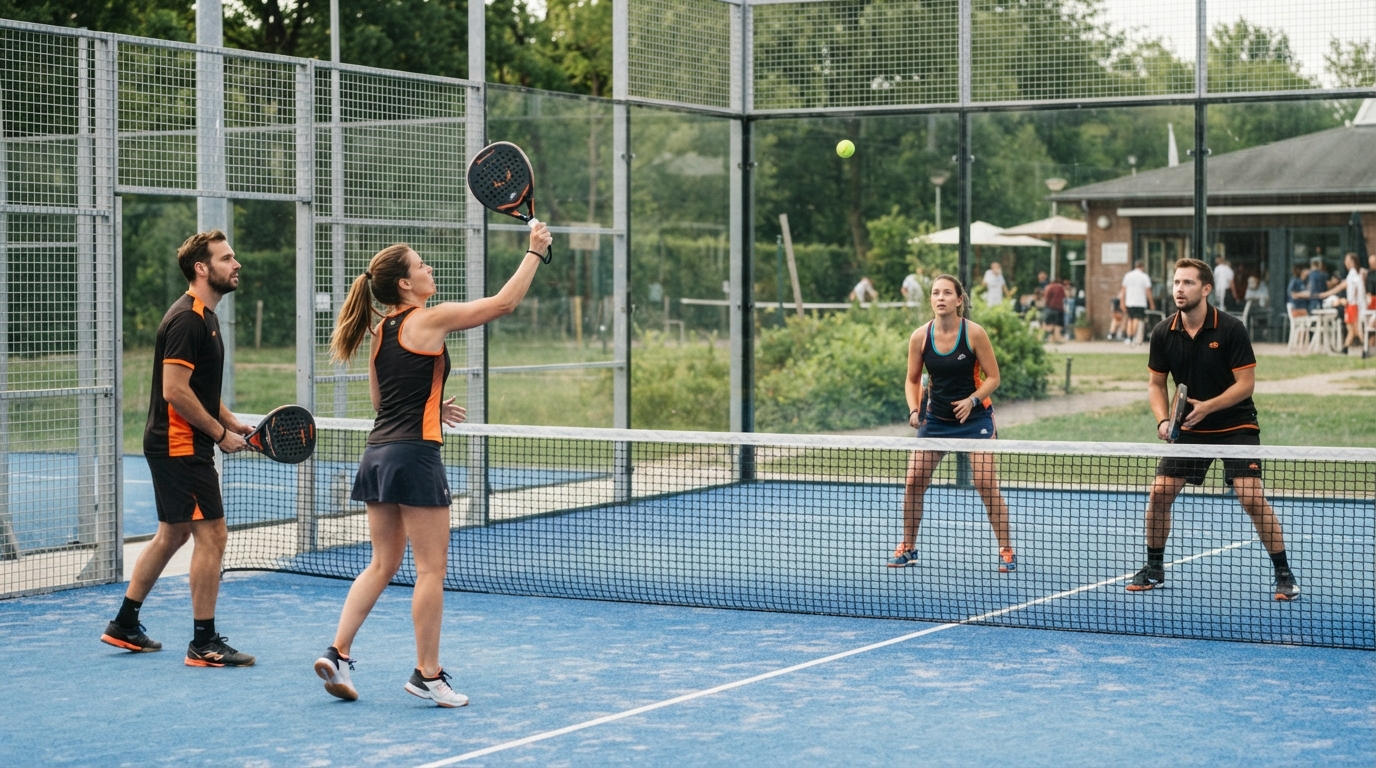
Choose one goal for your next session: recover to the middle after every wide ball, call every ball early, or move forward only after a helpful lob. A narrow goal creates clearer improvement than trying to fix every part of your game at once.
The LTA’s May 2026 participation update highlights the need for quality coaching and player-development resources as padel expands. Use lessons, practice games, and short post-point conversations to build a repeatable system with your partner.
Movement practice can be demanding. Build in hydration, sleep, and lighter days so you can train these skills with focus. Our recovery strategies for court sports athletes can help you make recovery part of your routine.
Padel Partner Positioning FAQ
How close should padel partners stand?
Stay close enough to protect the middle and move as a unit, while leaving enough room to react to wide balls. Your distance changes with the ball and whether you are defending or attacking.
When should both partners move to the net?
Move forward when your lob, deep return, or controlled shot makes it difficult for opponents to attack. Advance together and prepare for the next ball rather than rushing after a weak shot.
Who takes the middle ball in padel?
Agree on a simple system, then communicate early. The best choice depends on ball height, each player’s forehand or backhand, and who has the safer next shot.