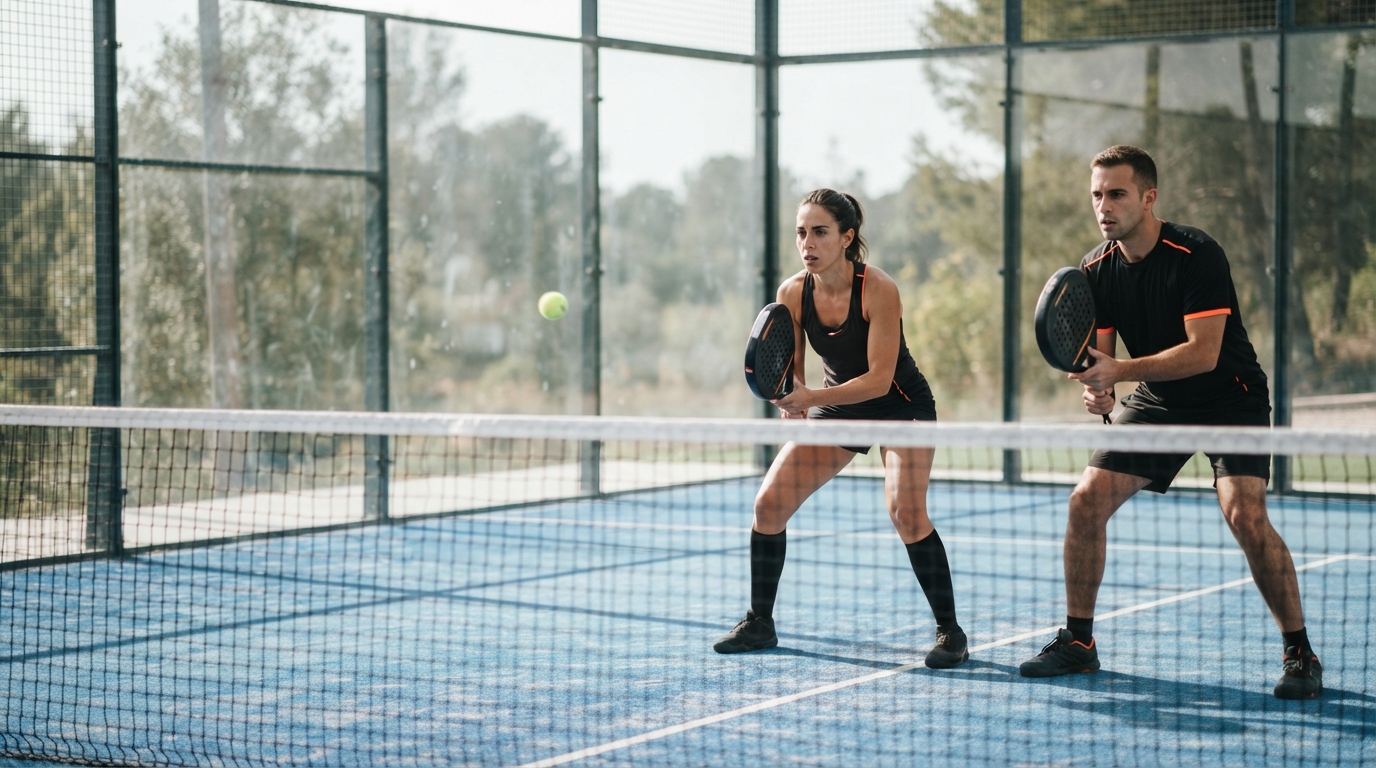
Great pickleball doubles is about two partners taking away space, moving with purpose, and choosing shots that improve their next position. That is why pickleball doubles positioning matters. A powerful drive may finish a point, but connected movement and smart placement control many more.
If you are still learning the sport, this guide to tennis, padel, and pickleball explains how pickleball differs from other racket sports. Next, learn how you and your partner operate as one unit. Use the ideas below to return with purpose, reach the Kitchen line together, and make calmer choices.
Why Positioning Wins Doubles Points
Many doubles points are decided before the final shot. A team that returns deep, advances together, and stays balanced can reduce opponents’ angles. A team that is split apart creates open lanes, confusion over middle balls, and difficult shots under pressure.
The USA Pickleball doubles strategy guide recommends deep serves and returns, coordinated movement to the Kitchen line after the two-bounce rule, patient crosscourt dinks, and purposeful middle balls. These are connected tactics. Each one helps your team gain or protect a better court position.
Picture your side of the court as a moving rectangle. When the ball travels wide, both players shift that way. When a partner moves forward, the other player recognizes the change and avoids being stranded deep. You do not need to stand shoulder to shoulder, but you should not leave a large, unprotected gap between you.

Build a Connected Pair
Return deep and advance with purpose
At the start, know who is responsible for the ball, the middle, and the next move. The receiver should aim deep with enough margin to avoid an easy attack. A deep return gives that player time to approach the Kitchen line and join the partner.
The serving team must be patient. The receiving team has an early chance to take the net, so rushing forward without a plan can leave the serving team exposed. Choose a controlled third shot based on the ball you receive. A drop can give you time to move up, a drive can work when the ball is high, and a reset can help when you are under pressure. The goal is not always a winner. It is creating a ball that lets both partners improve position.
Arrive at the Kitchen line together
The Kitchen line is a strong place to take balls early, cover sharp angles, and apply pressure with controlled volleys. Still, getting there is a team task. If one partner charges forward while the other stays deep, opponents can target the space between them or hit behind the advancing player.
Use a simple cue: advance together when the ball you hit gives you time. After a strong return or a soft drop, take purposeful steps forward. If your shot sits up, pause, split step, and prepare to defend. Smart positioning is not constant forward motion. It is choosing the right moment to move.
Choose High Percentage Shots
Use the middle and crosscourt dink
A well-placed ball through the middle can reduce extreme angles and force opponents to make a fast communication decision. Call middle balls early with a consistent word, such as “mine,” “you,” or “middle.” The call matters less than making it early enough for your partner to prepare. When both players hesitate, even a manageable ball becomes difficult.
Crosscourt dinks are also dependable because the ball travels over the lowest part of the net and crosses a longer distance. Use them to move an opponent wide, then look for a safer opening in the middle. Change direction only when the ball is high enough and your body is balanced.

Match your shot to your position
From the baseline, use a controlled drop when it can help the serving team reach the Kitchen. Drive only when the ball is high enough to keep below an opponent’s shoulder. From the transition zone, a reset can be the best choice when you need to neutralize the point.
At the Kitchen line, prioritize control. Dink with margin, volley toward a player’s feet, and avoid swinging hard at balls below net height. When one player attacks, both players should prepare for the counterattack.
Use stacking only when it helps
Stacking lets partners reposition after the serve or return so they can preserve preferred sides. It can help a right-handed and left-handed pair put more forehands in the middle, or let a player work from a more comfortable side.
The PPA Tour explanation of pickleball stacking notes that the correct server and receiver must begin in the proper locations, while the other partner may reposition after the serve. The main risk is poor communication. If you cannot switch smoothly or agree on middle-ball responsibility, use a traditional formation.
Three Drills for Better Positioning
Return and advance
One player serves while the other returns deep and moves toward the Kitchen line. The returning partner begins at the line and calls “together” when the returner can advance safely. Play the point, then switch roles. Focus on approach timing rather than hitting hard returns.
Middle-ball communication
Begin both teams at the Kitchen line and rally with dinks. Add occasional balls toward the middle. The receiving team must call the ball before contact. Stop when both players reach for the same ball or neither moves. This drill builds an early-decision habit.
Transition reset
Start one team near the baseline and the other at the Kitchen line. The baseline team hits a controlled drop or reset, then advances only when the ball gives them time. The net team applies pressure without forcing winners. Rotate after several points.

Turn Positioning into Match Habits
Before your next match, choose one shared goal. It may be returning deep, calling every middle ball, or moving to the Kitchen line together. Between points, use short reminders rather than long technical conversations. Clear communication also depends on composure after mistakes, which you can improve with the reset routines in our guide to mental performance training for court sports athletes.
Practice hard enough to develop skill, but allow time to recover between demanding sessions. Consistent sleep, hydration, and lighter movement days support sharper decisions on court. For a practical foundation, review these recovery strategies for court sports athletes.
Pickleball Doubles Positioning FAQ
Should both players always stand at the Kitchen line?
No. The Kitchen line is often a strong attacking position, but both players should advance only when their previous shot gives them time. If the ball is high or attackable for opponents, pause and defend.
Is stacking legal in pickleball?
Yes, provided the correct server and receiver are in the required starting positions. Check the current Official USA Pickleball Rulebook before league or tournament play because rules and clarifications are updated regularly.
What is the easiest way to cover the middle?
Agree on a clear call before playing, move as a connected pair, and decide which player takes common middle balls. A reliable system is more valuable than trying to cover every ball with speed alone.